
Where i have been
Five months on Oscillon. Three years shipping DeFi in production. I backtest mechanisms, publish when they fail, and ship the infra to prove it.
About
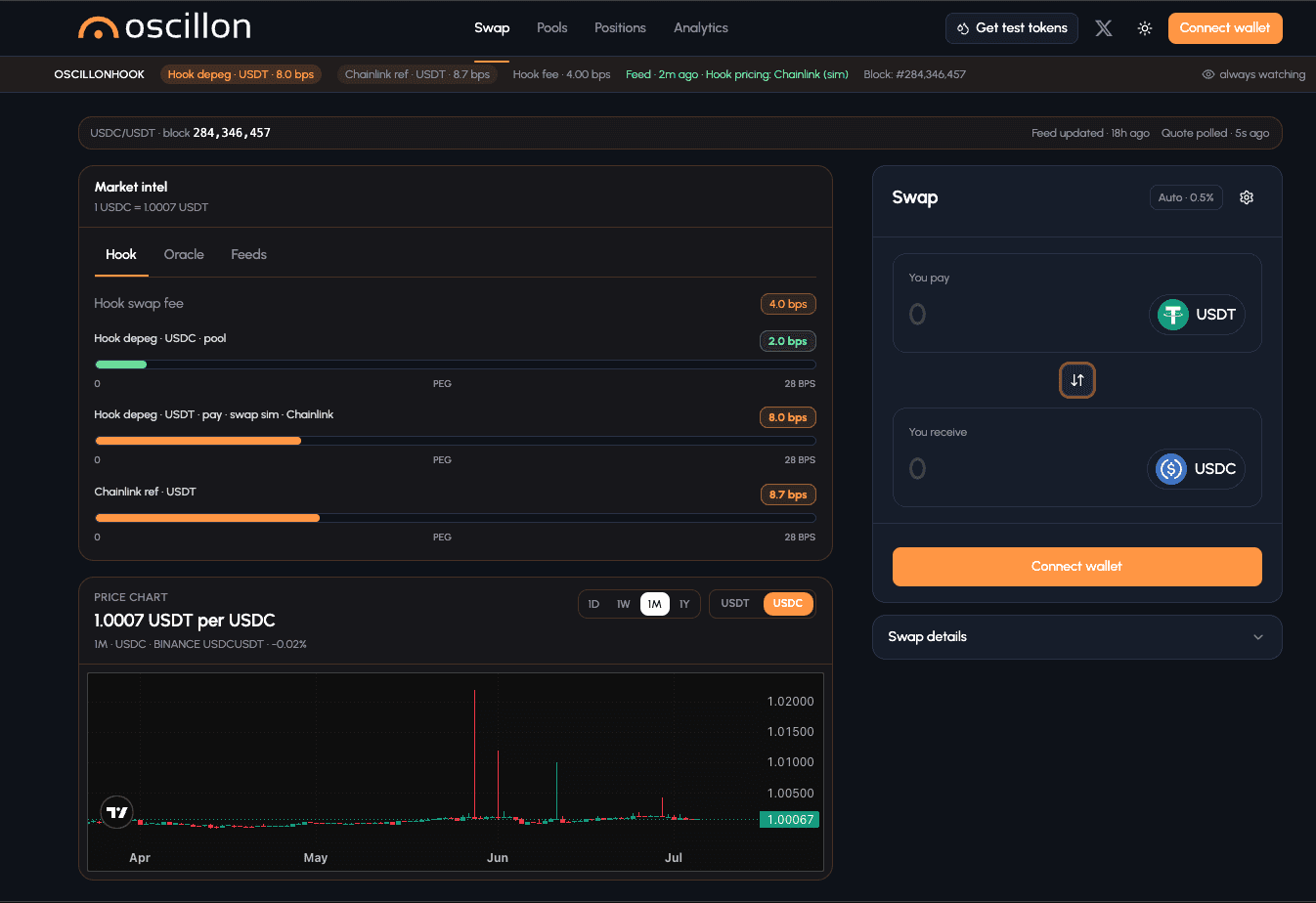
- ·Oscillon: state-weighted LVR model, −38% self-correction, oracle failure published pre-audit.
- ·Production: Judge Finance, FerrySwap, TrunkSwap — subgraphs, multi-chain, v4 hooks.
- ·Looking for: mechanism design, protocol risk, quant research where honest negatives are the job.
Stack
Mechanisms
Shipped, studied, and stress-tested
Current work
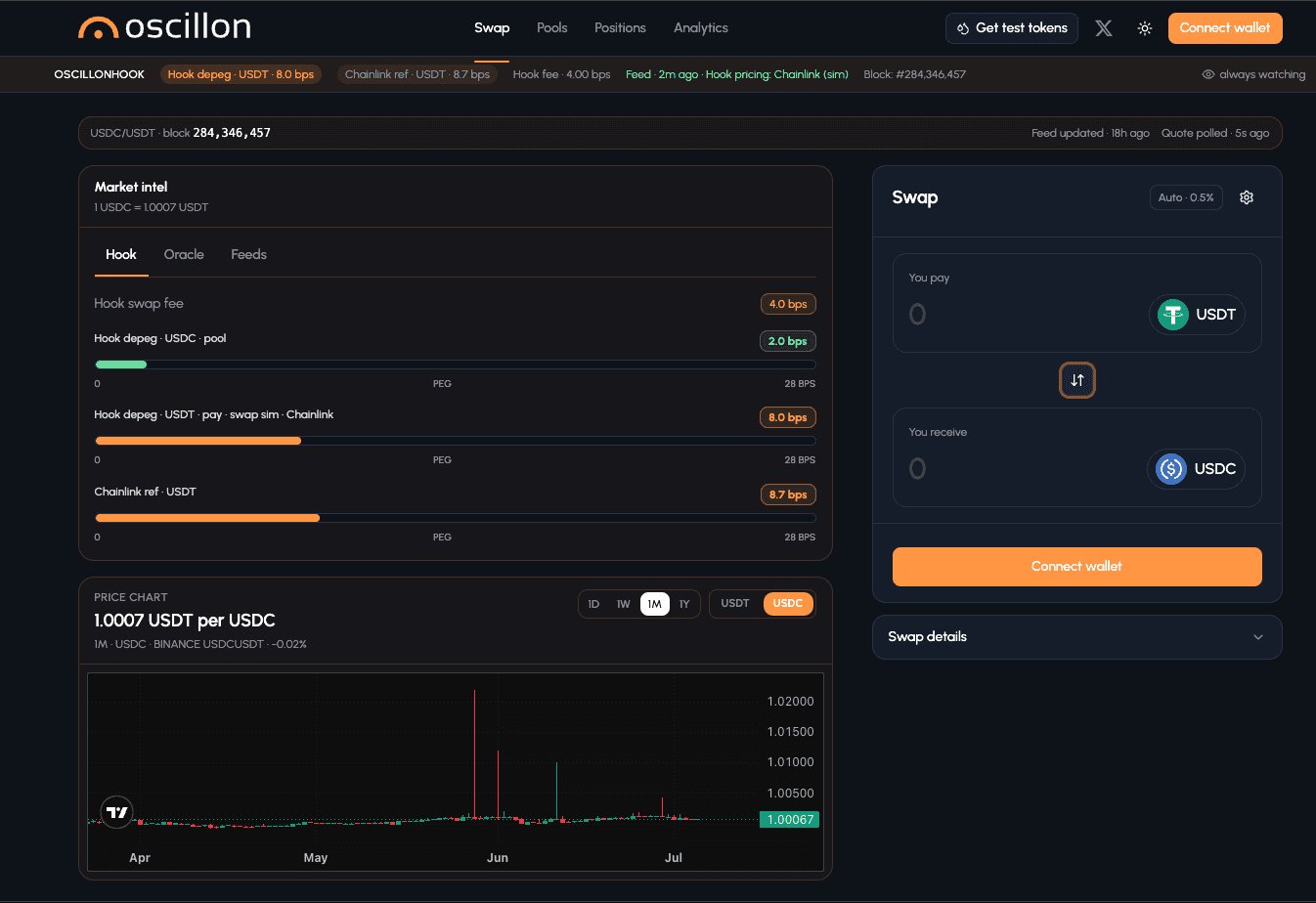
OSCILLON
Published why the mechanism fails — not just how it works.
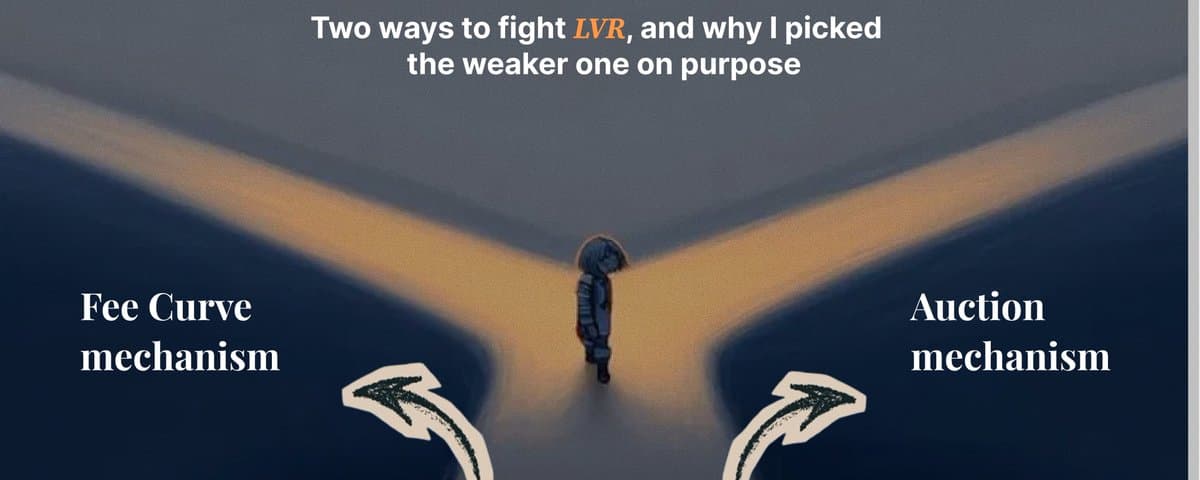
Can reactive fees materially reduce LVR in stablecoin pools?
Uniswap v4 hook + Python backtest on real swap data.
934 Chainlink days · 3 datasets · 16/16 Foundry tests · Milionis, Baggiani, Campbell
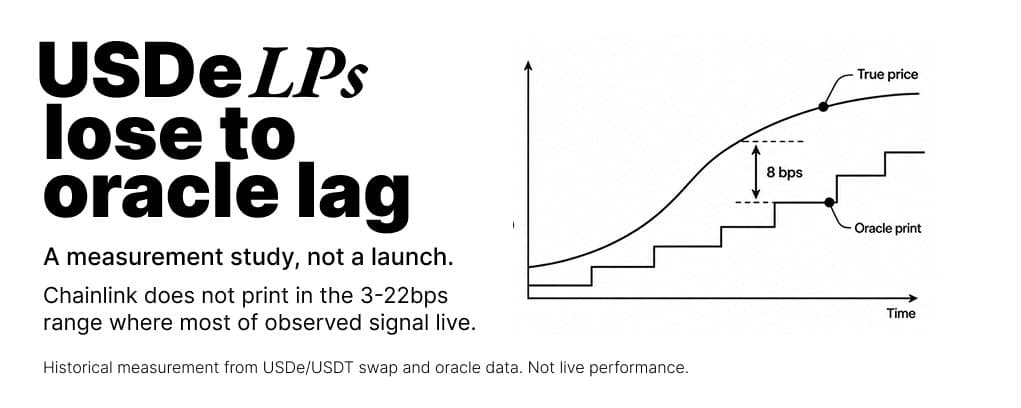
No reactive fee protects the first drain swap. Published the failure mode openly.
33.2%
depeg spread captured vs 14.8% static
0.71 bps
annual LP cost at $500M TVL — below allocator bar
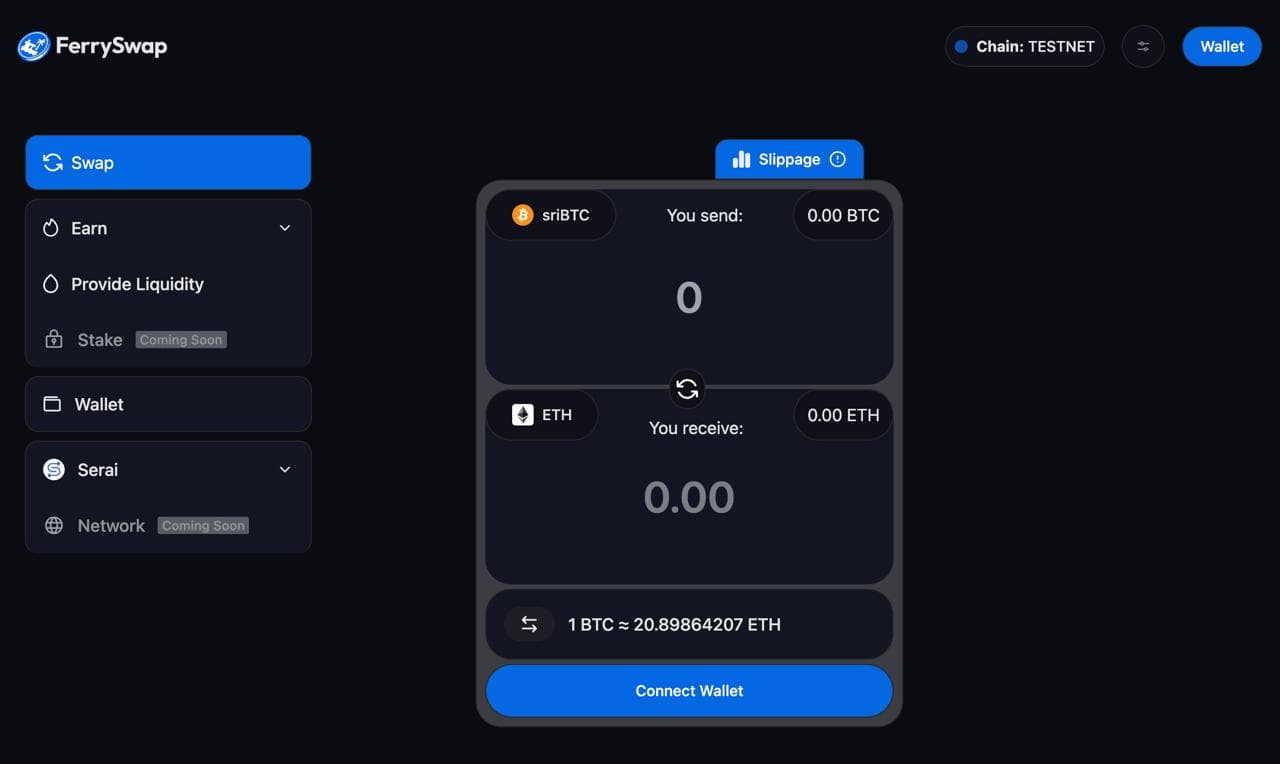
Production DeFi · Cross-chain DEX
FerrySwap
Decentralized exchange on Serai Layer 1 for swaps between Bitcoin, Monero, and Ethereum.
Serai's non-EVM runtime makes cross-chain swaps between BTC, XMR, and ETH inaccessible to users accustomed to EVM wallet UX.
Built multi-chain trading UI with keystore wallets, RainbowKit, custom non-EVM authentication, and ShadCN components aligned to the design system.
Enabled users to interact with complex chain logic through familiar swap interfaces.
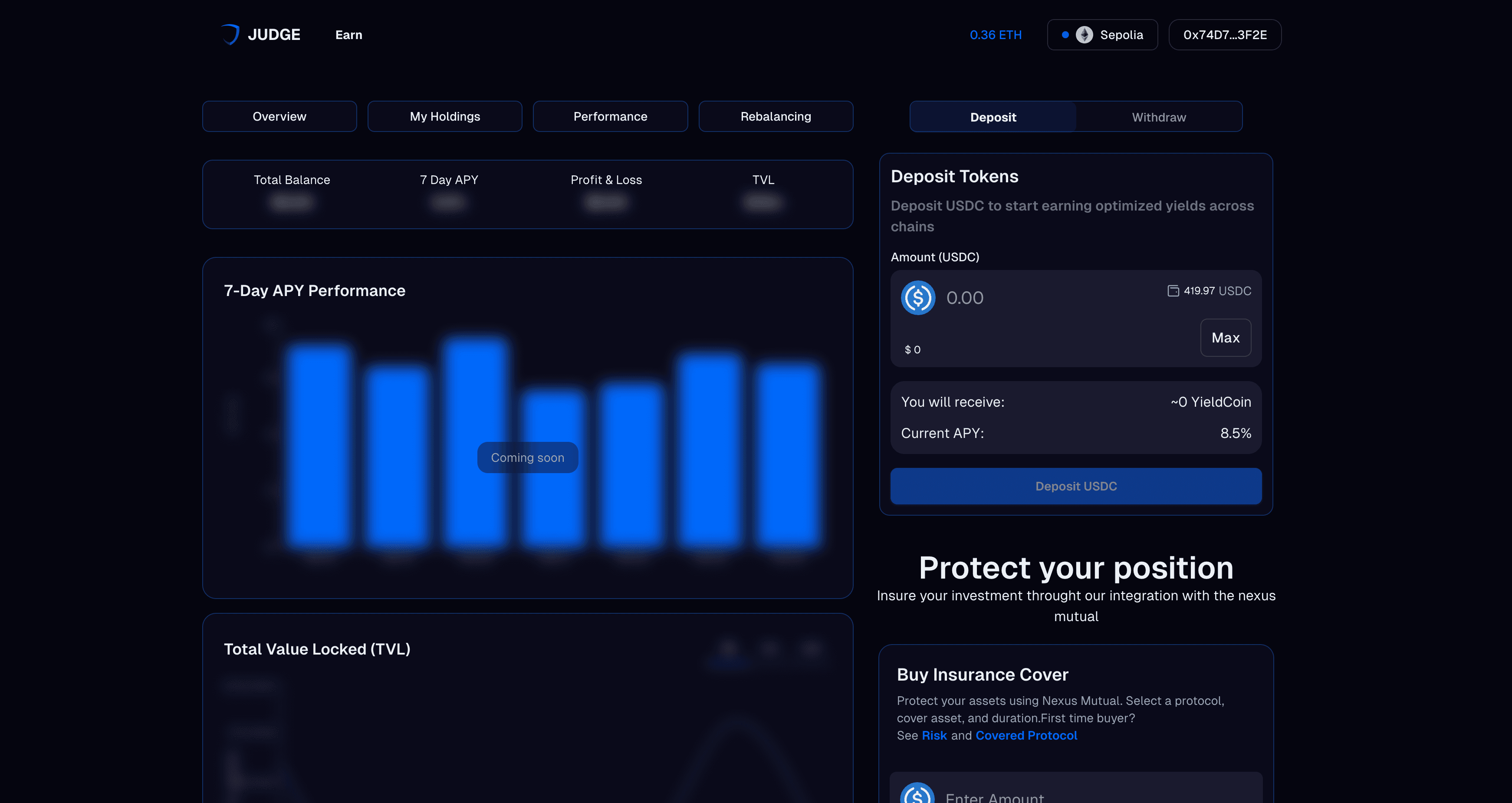
Production DeFi · Infrastructure
Judge Finance
Full-stack DeFi dashboard with cross-chain YieldCoin balance tracking, APY calculations, and portfolio analytics.
Cross-chain yield logic is opaque users can't track balances, APY, or portfolio health across Bitcoin, Monero, and Ethereum.
Built Earn dashboard with subgraph-indexed events, multi-chain balance fetching with fallback RPCs, deposit/withdraw flows, and Account Abstraction for gasless onboarding.
Abstracted complex yield mechanics into a single interface protocol teams can ship inside Safe App.
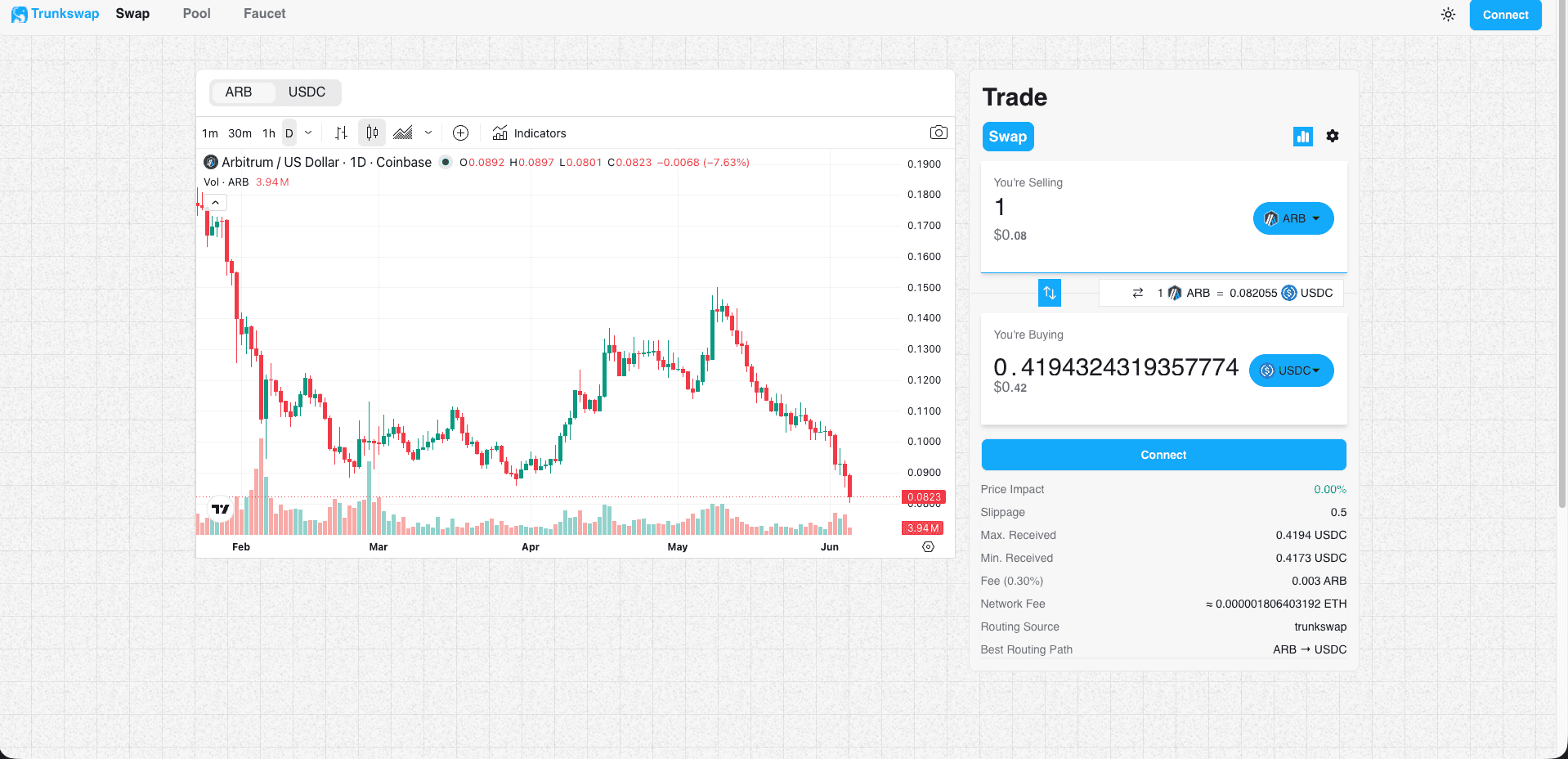
Production DeFi · DEX
TrunkSwap
DEX on Arbitrum Sepolia with Chainlink oracle pricing and RainbowKit wallet integration.
Bootstrapping a functional DEX prototype required wiring swaps, liquidity, and price feeds without overwhelming new users.
Forked Uniswap V2, built responsive Next.js frontend with Ethers.js, RainbowKit, Chainlink oracles, and Zustand state.
Shipped a working testnet DEX demonstrating end-to-end DeFi UX from wallet connect to swap confirmation.
Protocol research · Uniswap v4 hook
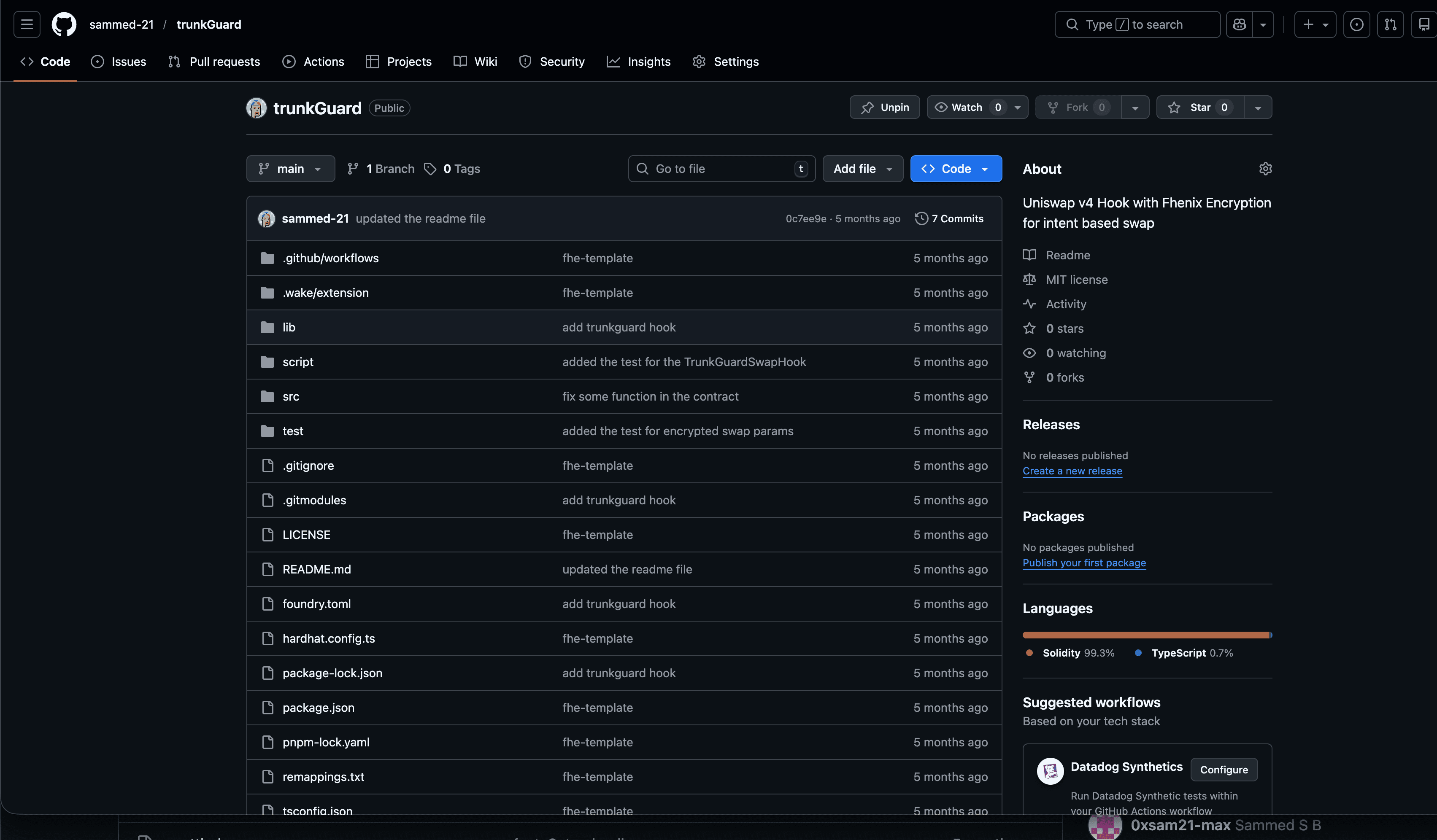
TrunkGuard
FHE-powered Uniswap v4 hook for private, MEV-resistant intent-based swaps on Fhenix.
On-chain swaps leak intent and expose users to MEV on public mempools.
Built Uniswap v4 hook validating encrypted orders and recording encrypted outputs using Fhenix CoFHE.
Demonstrated private, intent-based swap architecture as Atrium Academy capstone.
The way I work
From hypothesis to published result
01 — Hypothesis
Find a mechanism worth testing.
Start from a real economic failure, not a feature request. Oscillon began with one question: can a fee function protect LPs from adverse selection during a depeg?
01 — Hypothesis
Research question
Every project starts with an economic failure worth stress-testing — not a feature spec.
“Can reactive fees materially reduce LVR in stablecoin pools?”
02 — Build
Put the idea on-chain.
Uniswap v4 hooks, Solidity, Foundry. If the mechanism can't be implemented honestly, the idea doesn't count yet.
02 — Build
Protocol stack
Ship the hook, wire the oracle cascade, and make the mechanism testable on-chain.
03 — Attack
Backtest it. Stress it. Find the failure mode.
1,277 Chainlink days, 3 calibration datasets, adversarial oracle scenarios — looking for exactly where the mechanism breaks.
03 — Attack
Backtest pipeline
State-weighted modeling on real swap data — calibrated until the headline moves.
1,277
Chainlink days
3
calibration datasets
42/42
Foundry tests passing
04 — Publish
Show the result, including what didn't work.
Oscillon captures real LVR in depegs but doesn't clear a rational LP allocator's threshold. Published anyway.
04 — Publish
Honest findings
Mechanisms that fail the allocator bar still deserve a published failure mode.
39.9%
depeg spread captured vs 14.8% static
0.72 bps
annual LP cost at $500M TVL
Where i have been
Honest results
Things I tried to make work.
Most engineers say a mechanism works. Here's exactly where each of mine stopped working.
Oscillon
Dynamic fees for stablecoin LP protection
Captures real LVR in depegs. Doesn't clear a rational LP allocator's threshold.
Oracle disagreement guard
Cross-oracle deviation check before fee response
Caught stale-price drains in testing. Fails exactly when protection matters most — the disagreement lags the crash.
TrunkGuard
FHE-encrypted intents on Fhenix
Hid swap intent from the mempool. FHE latency made it a research prototype, not production-ready private execution.
Field notes
Notes


I'm a current DeFi mechanism designer shipping production protocols and published research.
Where
I've worked
Judge Finance
DeFi Infrastructure
Sept 2025 – Apr 2026FerrySwap
Full Stack Web3
May 2025 – Dec 2025Atrium Academy
Market Design
2025Got a mechanism worth breaking?
Open to mechanism design, protocol risk, and quant research roles — reach out directly or send a message below.